

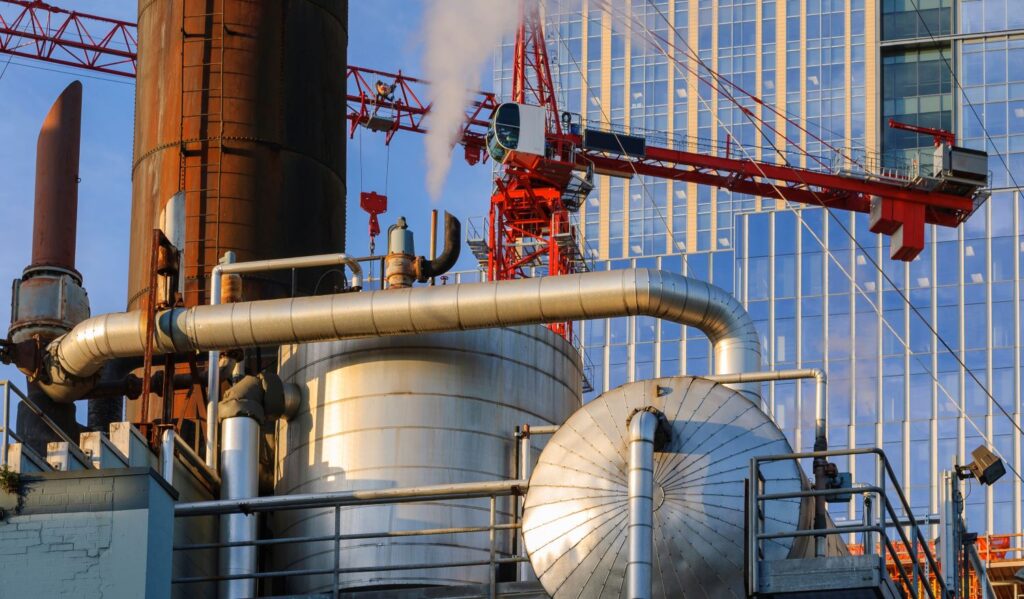
Steam power plants play a crucial role in modern industrial development and electricity consumption. Utilizing steam power to generate electricity, this complex process has become an integral part of the global energy infrastructure. In this article, we’ll delve into the essential knowledge surrounding steam power plants.
The Long History of Steam Power Plants
The history of steam power plants dates back to the 18th century during the development of steam engines, primarily driven by James Watt. His innovations marked a pivotal moment in the Industrial Revolution, revolutionizing industries and transportation systems worldwide.
Components of a Steam Power Plant
The process of electricity generation in a steam power plant involves several key stages:
Boiler
Steam is generated in the boiler by heating water. This heat is derived from various energy sources, such as fossil fuels, nuclear energy, or renewable resources like biomass and concentrated solar power.
Turbine
High-pressure steam flows through the turbine, causing it to spin and produce mechanical energy.
Generator
The turbine’s mechanical energy is converted into electricity using a generator, which operates on the principle of electromagnetic induction.
Rankine Cycle
The Rankine cycle is a fundamental thermodynamic cycle used in steam power plants. It involves continuous processes of compression, expansion, and heat exchange. Steam power plants aim to achieve high efficiency in energy conversion by optimizing this cycle. Improved efficiency reduces the heat rate, which is the amount of fuel energy required to generate a unit of electricity. Thermal power plants often integrate gas turbines and steam turbines to enhance their overall power output efficiency.
Environmental Impacts of Steam Power Plants
The electricity generation process in steam power plants can have environmental consequences, primarily due to greenhouse gas emissions from fossil fuel combustion. However, advancements like Carbon Capture and Storage (CCS) technology are being implemented to reduce these emissions. There is also ongoing development of cleaner and more sustainable alternatives, such as supercritical and ultra-supercritical steam cycles and the use of renewable heat sources.
Conclusion
Steam power plants remain a cornerstone of energy infrastructure, providing reliable electricity for industries and households. However, they face significant environmental challenges. Continuous research and innovation aim to find more efficient and sustainable methods of power generation to address these concerns and ensure a cleaner energy future.